
If you are an EPC looking for the next high-growth sector, or a business owner fighting to protect your margins, you have likely been watching Vietnam closely. Following our team’s return from Solar & Storage Live Vietnam 2026 in Ho Chi Minh City (July 8–9), one question came up:
Is the energy storage market here still viable after the recent policy shift?
The short answer is yes—but the way you win has completely changed. Although certain new local regulation has made some suppliers freeze, one clear market opportunity arose with EU’s CBAM updates.
📋 Table of Contents
- 1. What is the biggest local policy change in Vietnam in 2026? And why are people disappointed?
- 2. The EU Carbon Tax (CBAM): A Supply Chain Mandate
- 3. What is CBAM? And how does it affect non-EU businesses?
- 4. Why does grid power fail CBAM, and how do BESS and renewables fix it?
- 5. What is the status of CBAM regulation updates? Will they surely take effect?
- 6. What products are affected by CBAM?
- 7. What should factories absolutely avoid doing under CBAM?
- 8. How much does it cost a factory under CBAM if they do nothing? And how much can a compliant factory save?
- 9. What products does TWS ESS offer for factories to cope with CBAM?
- 10. Does TWS ESS have a proven track record in Vietnam and heavy industries?
- 11. Conclusion: Act During the 2026–2027 Window
- 12. References
1. What is the biggest local policy change in Vietnam in 2026? And why are people disappointed?
From our market intelligence in Vietnam prior to the Solar & Storage Live Vietnam 2026 and our face-to-face conversations with partners this week, it has clearly come to everyone’s notice that the policies in Vietnam are changing.
One of the biggest changes is the Decision No. 963/QD-BCT.
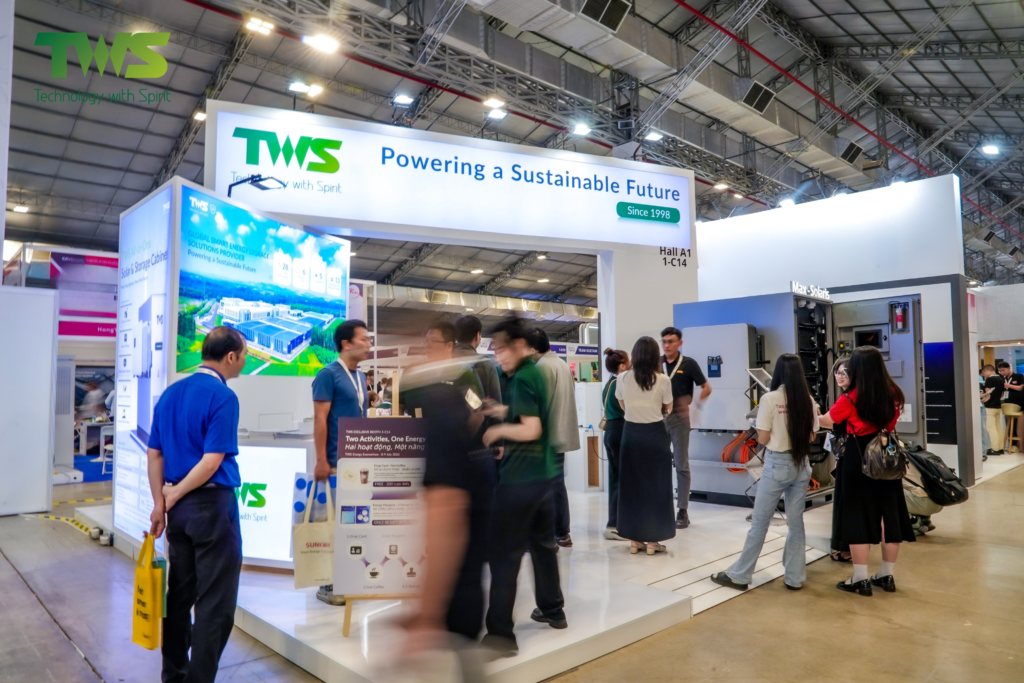
Under this new Decision, the Vietnamese government completely restructured its Time-of-Use (TOU) framework:
🔹 The Old Way: Two separate peak-rate windows per day, allowing batteries to run two profitable charge-discharge cycles.
🔹 The New Way: A single, continuous 5-hour evening peak block from 17:30 to 22:30 (Monday to Saturday).
Because systems are now limited to one arbitrage cycle a day, many assumed the financial case for storage was gone. But that is only true if you are looking at the market the old way. If you look closer at specific buyers, high-value opportunities arise.
2. The EU Carbon Tax: A Supply Chain Mandate
For manufacturing exporters in Vietnam (and other countries as well), local utility bills are only part of the equation. The bigger challenge is the EU Carbon Border Adjustment Mechanism (CBAM), which entered its full financial penalty phase on January 1, 2026.
While many are already feeling the operational hassle, a massive regulatory wave is coming soon to apply to more products, and to target loopholes.

3. What is CBAM? And how does it affect non-EU businesses?
One may wonder what CBAM is and why this EU regulation affects people outside the European Union in countries like Vietnam.
To put it simply, CBAM acts as a carbon adjustment fee applied to certain goods entering the European Union. Its primary goal is to prevent what economists call “carbon leakage.”
For years, EU-based manufacturers have faced highly strict environmental regulations and high carbon costs. Without an adjustment mechanism, there was a strong incentive for production to simply shift outside the EU to regions with less stringent environmental rules. This shift did not actually reduce global emissions, and it placed businesses with sustainable practices at a commercial disadvantage.
Who exactly is affected?
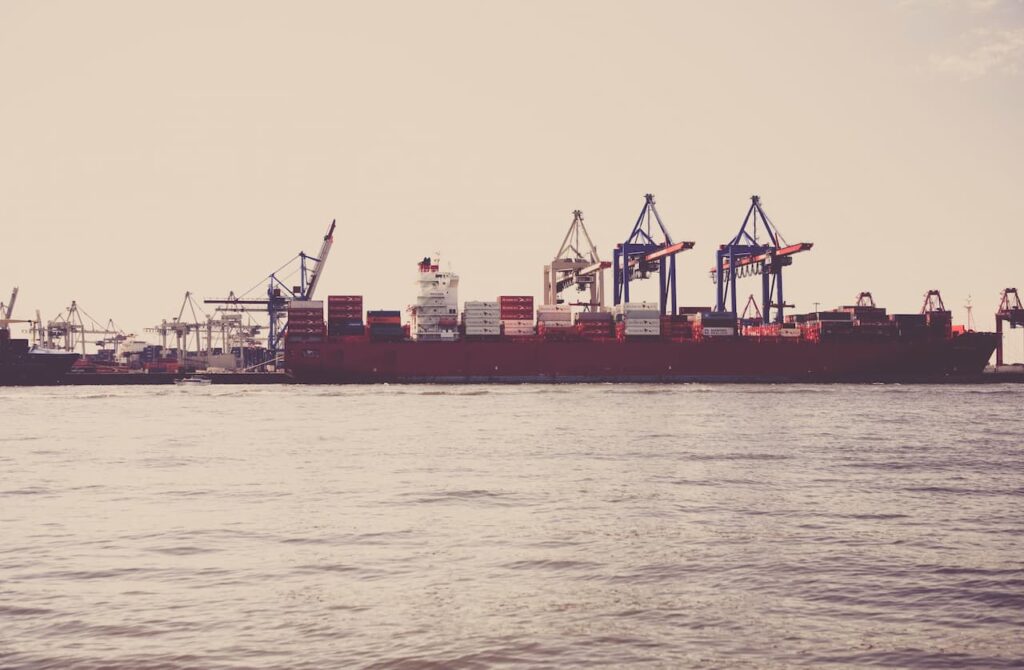
CBAM directly hits any non-EU company exporting covered raw materials and industrial goods into the European Union. However, it also creates a massive ripple effect upstream: any supplier providing materials, components, or processing to those exporting companies is also indirectly affected.
For the list of raw materials and goods affected, see question 6.
Because EU importers must fully verify the total embedded emissions of the finished product, exporters are now forcing their entire local supply chains to provide transparent, low-carbon data.
4. Why does grid power fail CBAM, and how do BESS and renewables fix it?
Under CBAM frameworks, standard grid electricity cannot be simply recognized as “clean.”
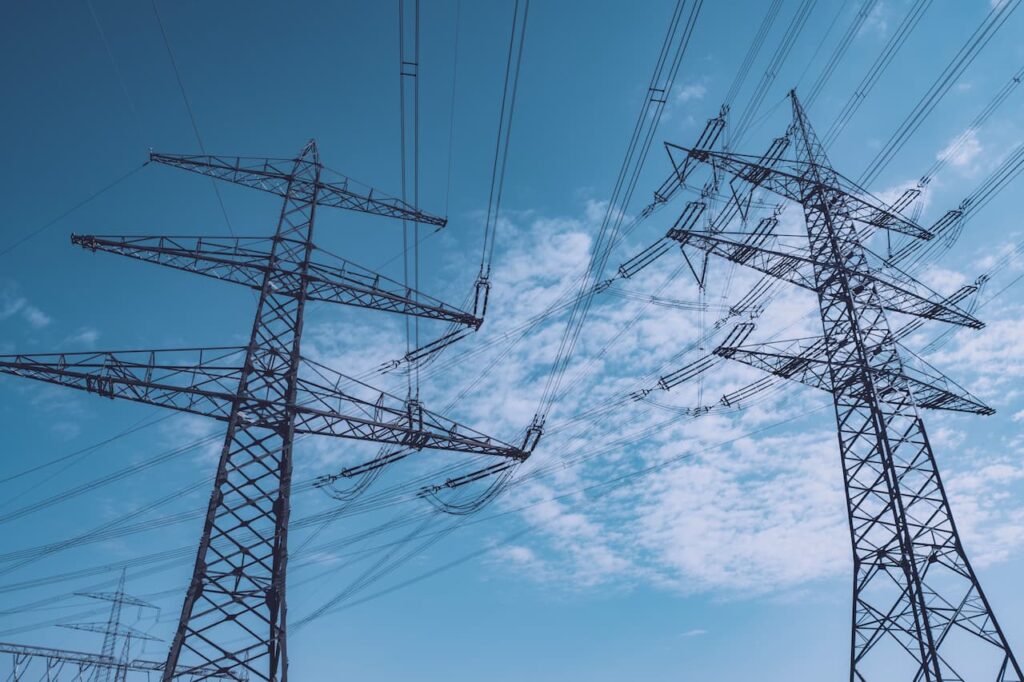
Because the utility grid mixes renewable energy with fossil fuels, its carbon footprint cannot be easily verified or tracked. To qualify for lower carbon tariffs, manufacturers must prove a direct, traceable connection to green power—meaning energy must be generated on-site or via a dedicated, directly connected renewable resource.
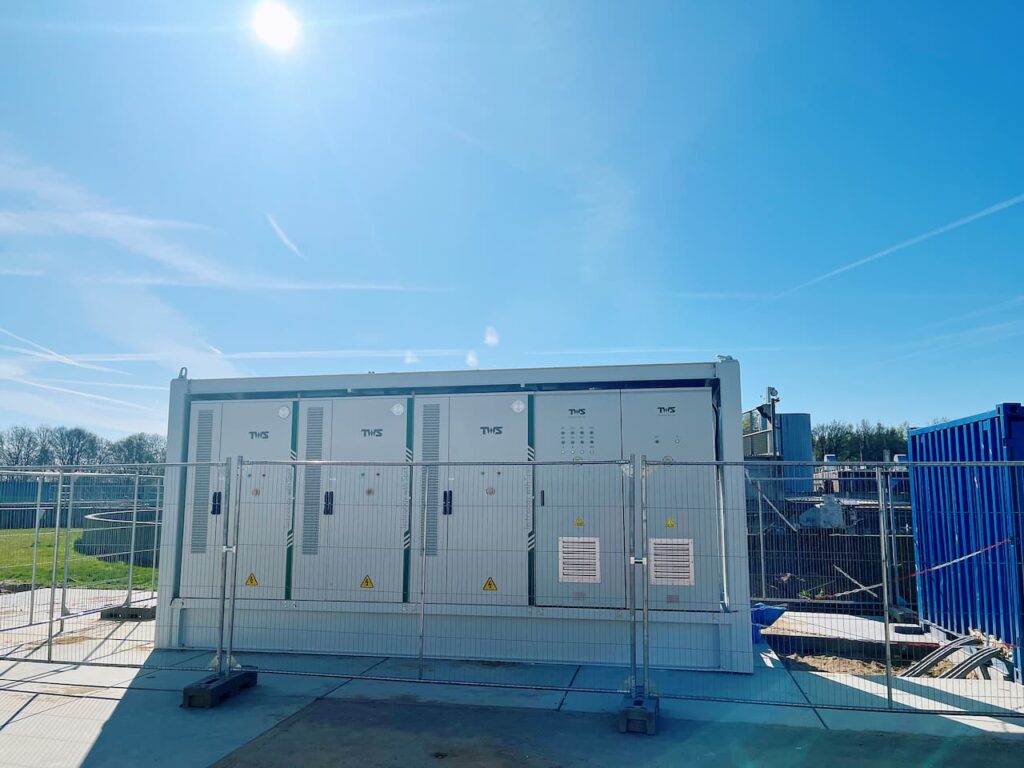
This creates a critical operational bottleneck. Exporters frequently run evening and night shifts to sustain production, precisely when solar generation drops to zero. This is where a Battery Energy Storage System (BESS) becomes non-negotiable. A BESS captures surplus daytime solar energy and stores it for direct deployment during night operations. This integration provides a continuous, fully auditable stream of green power, securing compliance and shielding products from punitive carbon levies.
5. What is the status of CBAM regulation updates? Will they surely take effect?
There have been two major updates of the CBAM regulation expansion in 2026. And they are expected to be a certain thing for the future.
The European Parliament’s July 2026 update sealing the loopholes and expanding CBAM targets to finished steel and aluminium downstream goods.
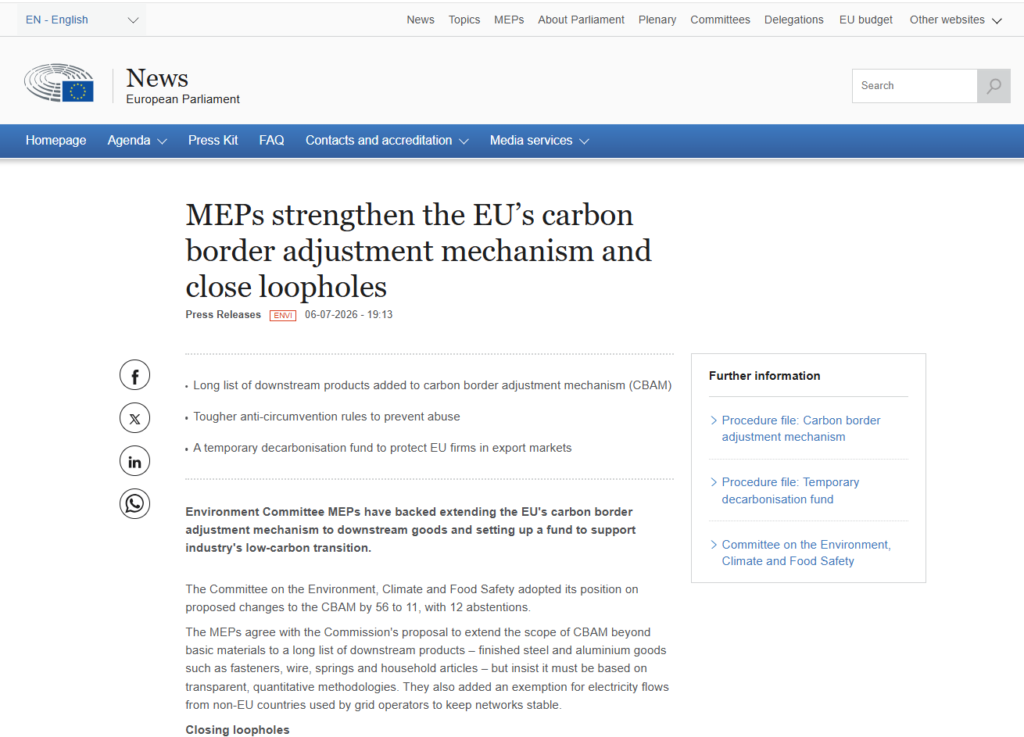
In early July 2026, the European Parliament’s Environment Committee (ENVI) voted overwhelmingly (56 to 11) to adopt a strict stance on CBAM enforcement [1]. Following the EU Council’s “General Approach” agreement on June 12, 2026 [2], the largest political obstacles have officially been removed and the expanded CBAM has become a certainty [3].
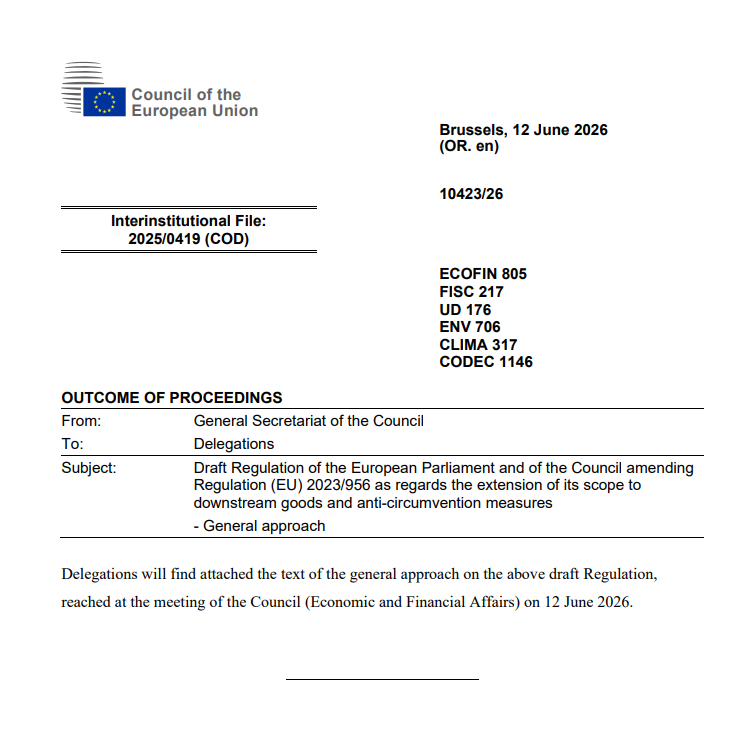
This new legal mandate does not just expand the tax—it deploys anti-circumvention measures specifically engineered to stop overseas factories from out-maneuvering the system.
6. What products are affected by CBAM?
The Original 6 Sectors (Active Now)
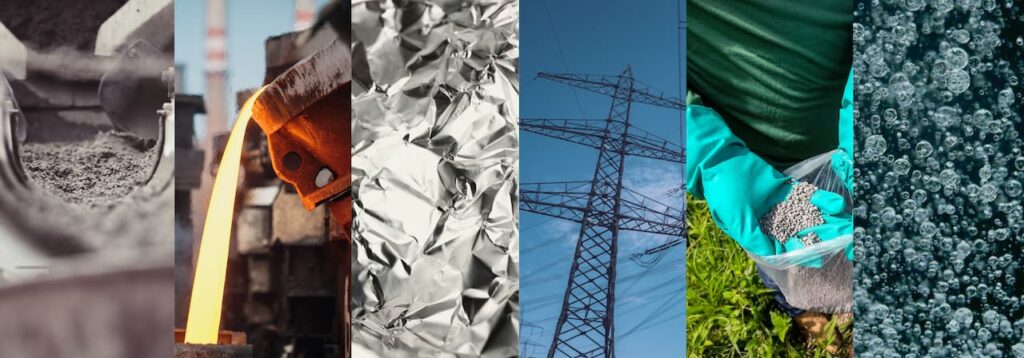
Basic Industrial Materials:
1. Cement: Clinker and process emissions.
2. Iron & Steel: Primary iron, tubes, pipes.
3. Aluminium: Unwrought and alloys.
4. Fertilisers: Ammonia, nitric acid.
5. Electricity: Direct grid imports.
6. Hydrogen: Compressed & uncompressed.
The Expanded 2028 Mandate (Voted July 2026) [3]
CBAM Expanded Downstream Goods

Massive expansion into finished products containing steel or aluminum, including:
• Machinery & Industrial Hardware
• Automotive & Vehicle Components
• Domestic Home Appliances
• Construction Equipment
7.What should factories absolutely avoid doing under CBAM?
Anti-Circumvention Bans:
Below are the common logistical loopholes being closed by the EU. These practices are what factories shall absolutely avoid. The European Commission will continuously monitor global supply chains and will react within three months to enforce penalties if any new evasion patterns are detected.

Paperwork Tweaks (Slight Processing)
Making minor physical or chemical changes to products just to switch customs codes and hide from CBAM.
Selective Greenwashing (Resource Shuffling)
Routing clean energy only to your EU export line while running the rest of your factory on dirty power.
Order Splitting (Parcel Fragmentation)
Breaking a bulk order into smaller batches or separate online packages to stay under the minimum weight limits.
Country Hopping (Supply Chain Shifting)
Routing goods through a middleman country just to change the origin on the paperwork.
8. How much does it cost a factory under CBAM if they do nothing? And how much can a compliant factory save?
Various factories targeting the EU market, regardless of sizes, are affected by the CBAM.
To give an idea of the costs, below is an example of a steel fasteners factory.

Data from the European Fastener Distributor Association (EFDA) shows that exporting standard steel fasteners from Vietnam without verifiable green energy documentation results in a default punitive tariff of €135.61 per ton [4].
⚠️ The Financial Impact:
Producing that same ton of steel components costs roughly €67 in actual electricity [5]. The carbon penalty is roughly twice the entire power bill, adding an approximate 10% extra cost to total operational expenditure (OpEx).
🛑 Punitive EU CBAM Carbon Tax: €135.61 / ton [4]
⚡ Baseline Factory Electricity Cost: €67.42 / ton [5]
How BESS+ Renewables Saves Massively
By using a high percentage of green energy with BESS + PV, manufacturers can reduce their calculated CBAM liability from €135.61 down to €51.84 per ton—securing an immediate €83.77 per ton advantage over competitors relying entirely on unmitigated grid power [4].
9. What products does TWS ESS offer for factories to cope with CBAM?
To capture these opportunities, you need ESS solutions that match your specific scale. At TWS Technology ESS, we provide an integrated mix of all-in-one outdoor cabinets for lighter industries, alongside large-scale containerized systems optimized for energy-intensive sectors.
Modular Energy Storage Cabinets
Perfect for lighter industrial facilities looking for simple, space-saving installation.
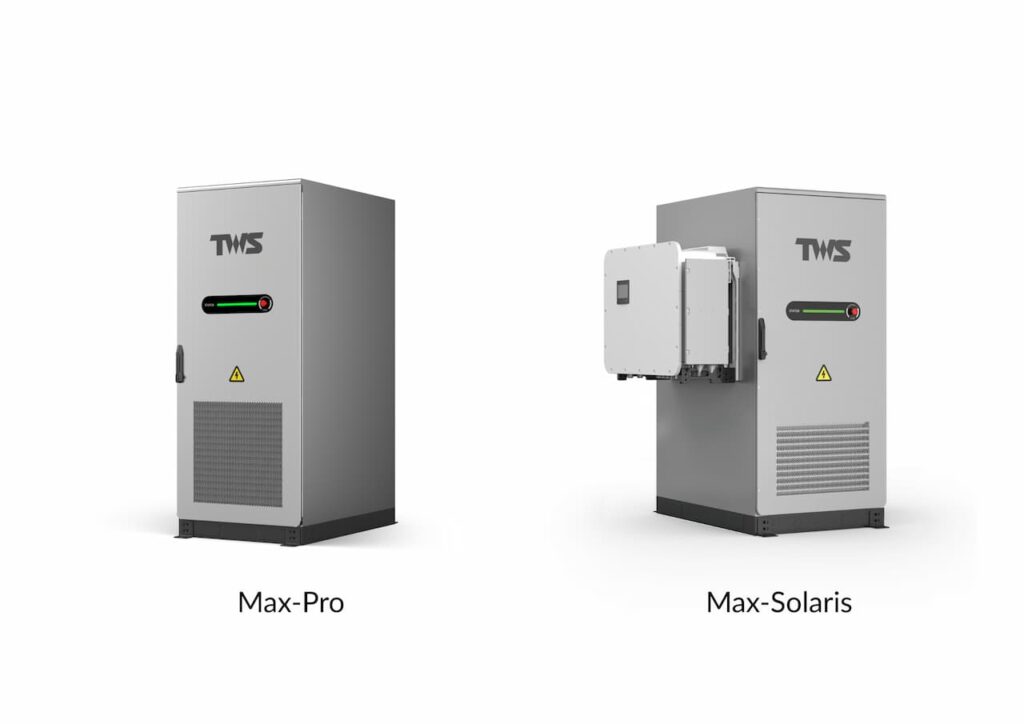
🔋 TWS Max-Pro (125 kW / 262 kWh): A heavy-duty, cycle-resilient cabinet optimized for industrial peak shaving and intensive demand charge management.
🔋 TWS Max-Solaris (125 kW / 262 kWh): Employs a native DC-coupled architecture to maximize solar-plus-storage conversion efficiency.
Large-Scale Containerized Systems
For energy-intensive industries, factories expanding production, and large-scale manufacturing plants facing grid limitations.
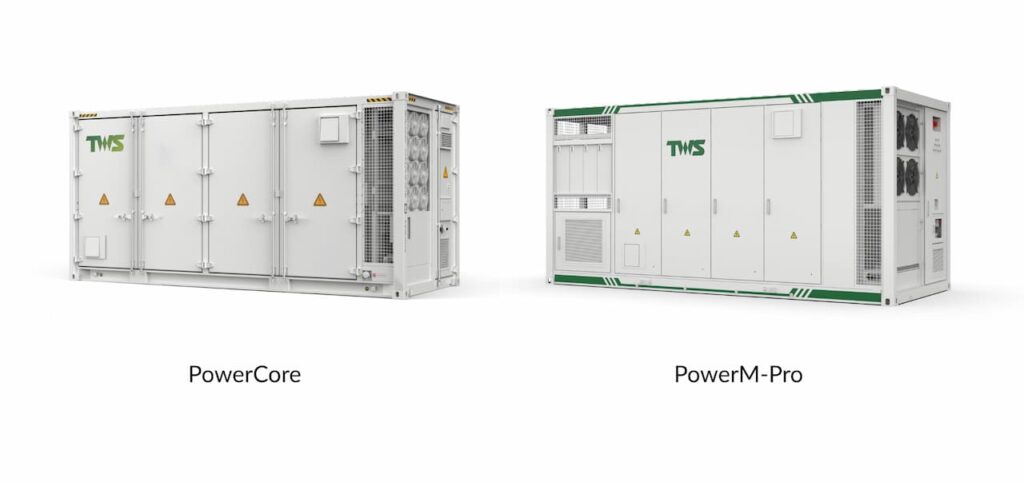
🔋 PowerM-Pro (1000kW / 2507kWh & 1720kW / 3343kWh): Highly flexible, high-density containers built to handle heavy industrial loads, stabilize factory power, and manage large peak-shaving strategies.
🔋 PowerCore (5015 kWh): Our ultra-high capacity containerized solution designed for massive energy storage, giving heavy industrial facilities the scale they need to run large-scale operations on stored green power.
10. Does TWS ESS have a proven track record in Vietnam and heavy industries?
When investing in energy storage, you naturally want to know: does the solution supplier have verifiable records. Yes. See below our cases in Vietnam and in heavy industries.
Vietnam Projects:
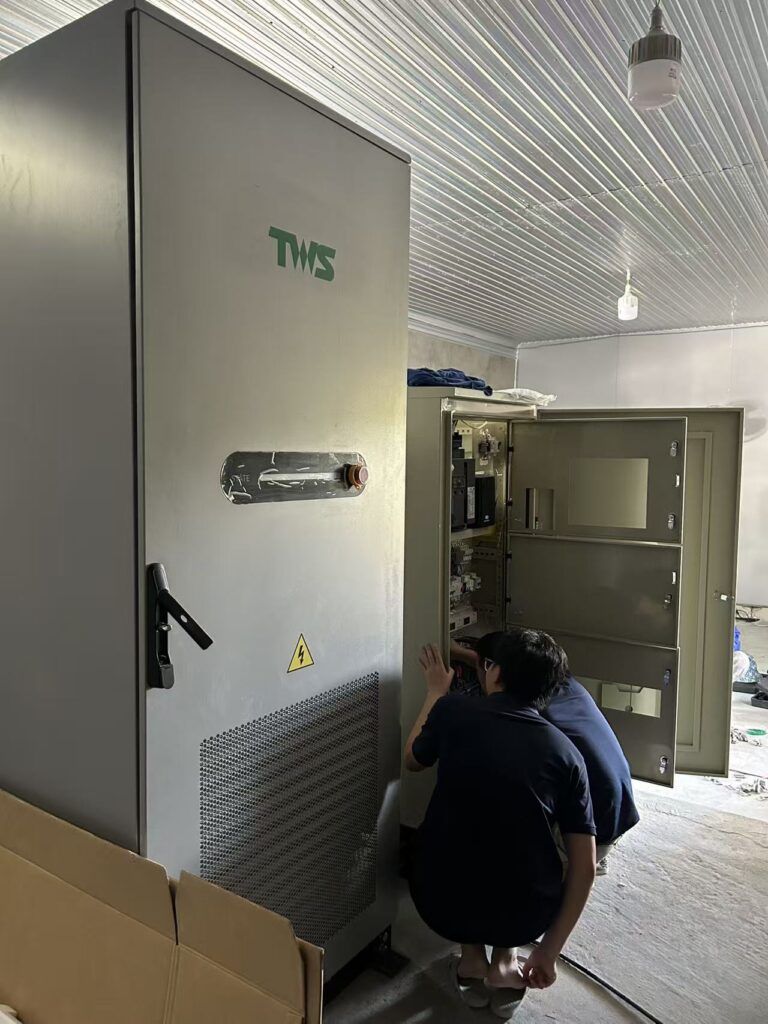
💧 Water Purification Manufacturing (Hanoi): A 125 kW / 262 kWh TWS Max-Pro system running smart peak-shifting to cut operational costs while protecting the facility from low-hydropower grid stress.
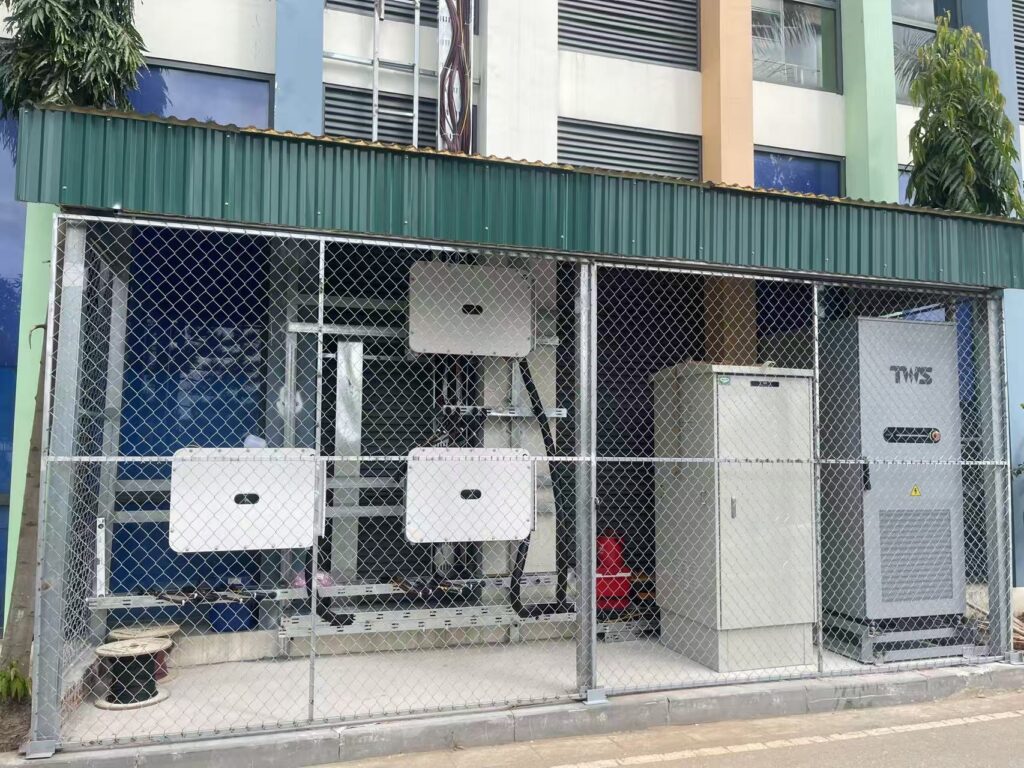
🏢 Municipal Infrastructure (Quang Ninh): A 125 kW / 262 kWh TWS Max-Solaris system utilizing an efficient, DC-coupled design to seamlessly integrate rooftop solar with public infrastructure.

🔧 Dynamic Factory Expansion (Hanoi): Scalable TWS MU units providing instant backup and supplemental power, allowing a growing factory to bypass slow grid upgrade approvals and hefty costs for hardware such as transformer.
Heavy Industry Expertise
For high-energy manufacturing sectors most affected by the new EU carbon rules, our large-scale portfolio has years of field experience handling heavy industrial workloads:
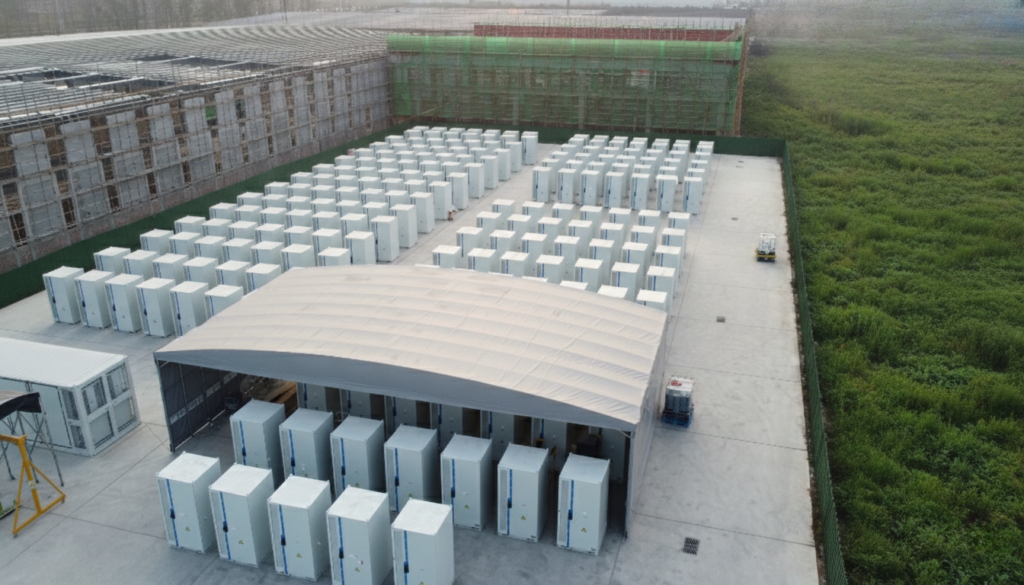
🏭 East China Steel Plant: A massive 123 MWh system providing critical millisecond backup power, peak shaving, and frequency regulation for continuous steel manufacturing.
🏗️ Large-Scale Industrial Cost Optimization (Jiangsu, China): A 225 MW / 450 MWh installation built for industrial cost reduction through large-scale off-peak energy storage.
11. Conclusion: Act During the 2026–2027 Window
For Vietnamese export manufacturers protecting their access to Europe, energy storage is an essential tool for profitability and market shares.
If you want to capitalize on these policy changes, explore our solutions, or discuss project engineering, feel free to contact our team or follow us for ongoing market insights.
Our Email: infoess@tws.com
Our Linkedin: TWS-Technologie ESS
Our Facebook: TWS-Technologie
Our Instagram: twstechnologyess
12. References
[1] European Parliament Press Release (July 2026): https://www.europarl.europa.eu/news/en/press-room/20260629IPR46212/meps-strengthen-the-eu-s-carbon-border-adjustment-mechanism-and-close-loopholes
[2] ESG Today Intelligence (July 2026): EU Lawmakers Vote to Expand List of Products Under CBAM Carbon Import Tax
[3] Council of the European Union Press Release (June 2026): https://www.consilium.europa.eu/en/press/press-releases/2026/06/12/council-moves-to-strengthen-the-eu-s-carbon-border-adjustment-mechanism/
[4] European Fastener Distributor Association’s Report: https://www.nfda-fastener.org/assets/docs/EFDA-CBAMcostscalculationin2026.pdf
[5] IMARC Group: https://www.imarcgroup.com/insight/steel-bolts-fasteners-cost-model