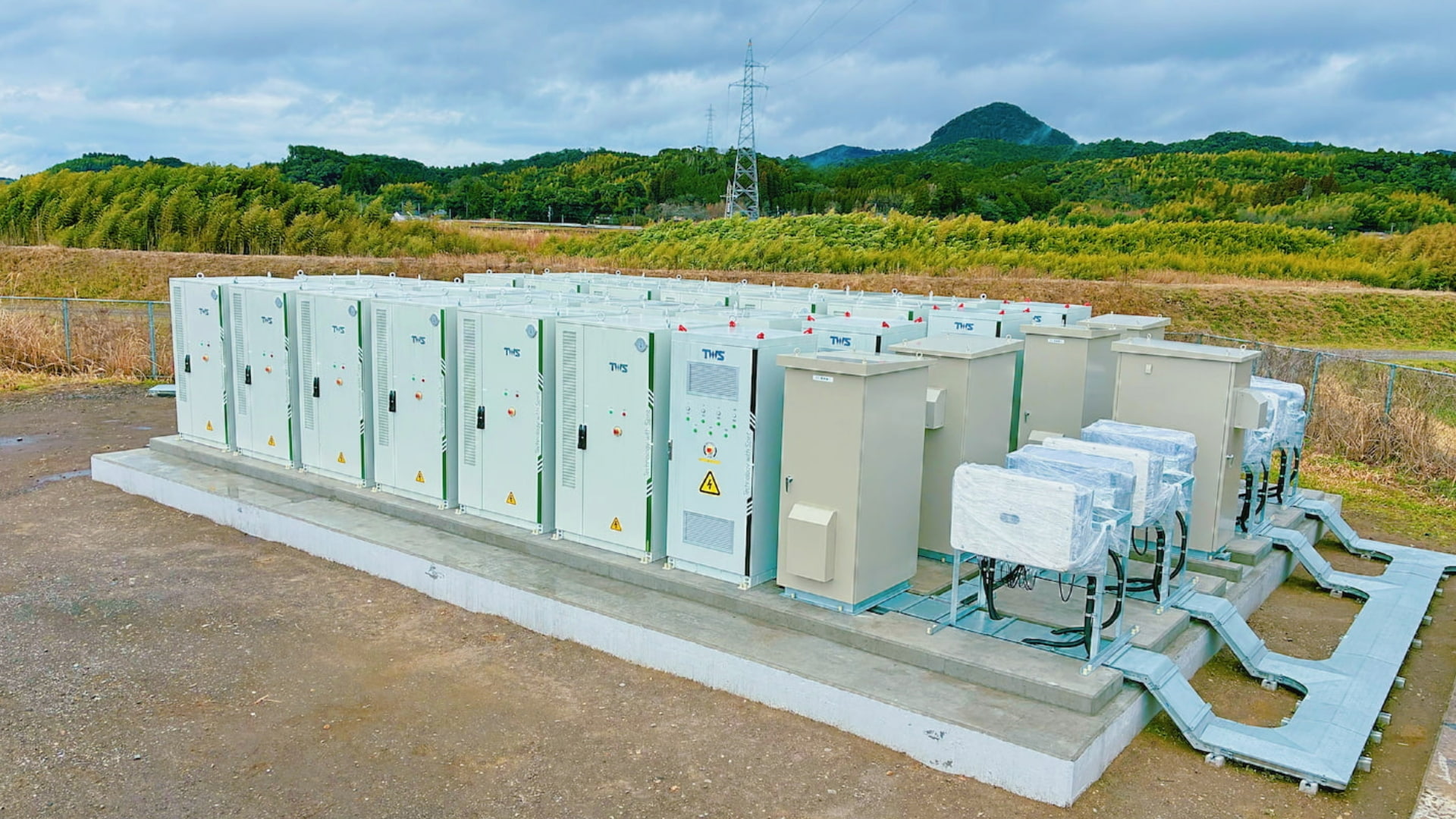
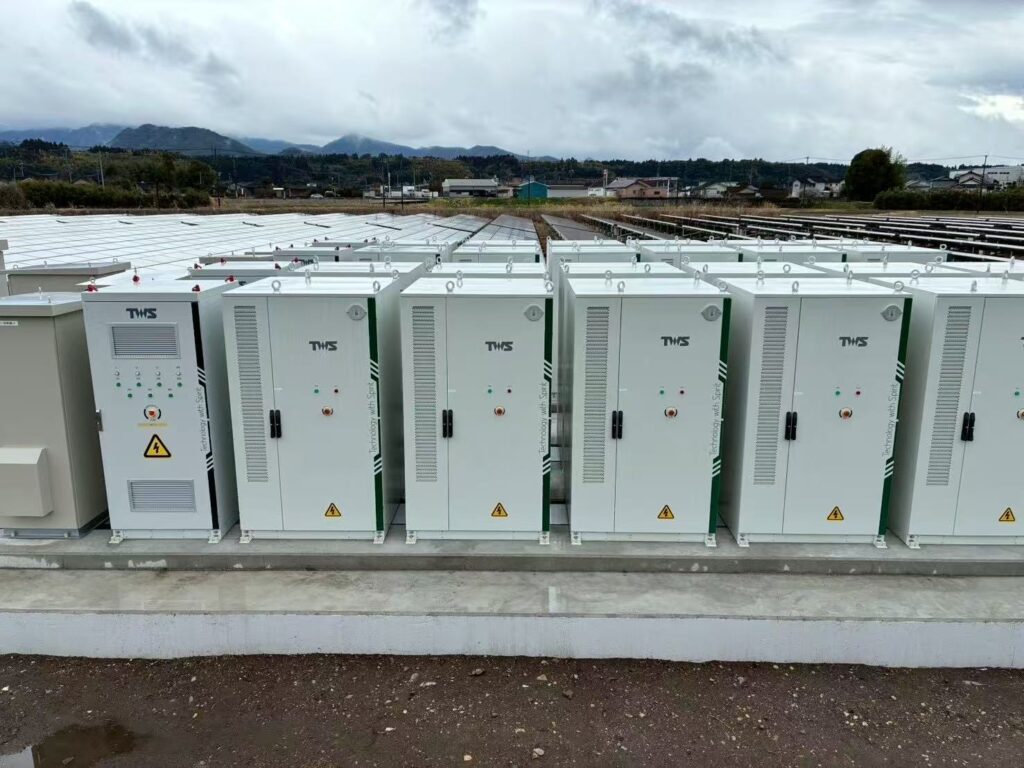
Japon 1,7 MW / 6,7 MWh BESS sur réseau pour l’intégration des énergies renouvelables
Le Défi
Renewable absorption pressure — Kyushu has seen rapid PV growth, but limited grid flexibility leads to curtailment and frequency fluctuations. Midday solar peaks overlap with low demand, stressing grid frequency and voltage stability.
Multi-market coordination — Coordinating PV self-consumption, FIP settlement and capacity-market obligations on a single asset demands sophisticated dispatch logic and reliable revenue stacking.
Climate and reliability — Frequent typhoons and hot, humid conditions require robust enclosure protection and proven thermal resilience to keep the system running year-round
La solution
TWS ESS battery + Huawei PCS — TWS high-safety battery modules form the storage core, paired with Huawei string PCS for efficient AC/DC conversion and granular string-level management.
Multi-market EMS — A single EMS orchestrates PV generation, FIP settlement and capacity-market bidding, dynamically optimizing charge and discharge against price signals and grid dispatch.
Grid support capabilities — Provides frequency regulation (FCR), reactive power support and black-start readiness to strengthen local grid resilience.
Résultats clés
Improved grid stability — Real-time charge and discharge smooths PV fluctuations, cuts curtailment and improves regional frequency quality.
Stacked revenue streams — PV generation, FIP premium and capacity-market payments are captured from one asset, improving project economics.
High availability — The Huawei PCS + TWS battery combination sustains high availability through heat, humidity and typhoon conditions.
Contactez-nous
Contactez dès maintenant nos experts en stockage d'énergie (ESS) pour obtenir votre solution personnalisée !